Surface-level detail
Irradiance on PV module faces, leaves, ground patches, or any defined element, not array-level averages. Assess local non-uniformity and help identify areas where uneven light may contribute to electrical mismatch.
GPU-based 3D modelling · PV simulation framework
LuSim is LuciSun's GPU-based simulation framework for photovoltaic sites where geometry, surroundings, and layout matter. Analyse how light reaches or is blocked across your 3D scene, with view factors and component-level irradiance to support design decisions on agrivoltaics, bifacial arrays, carports, and other demanding configurations.
3D solar resource assessment: irradiance, shading, and view factors.
Energy yield simulation is not yet integrated in this application as the continuation of resource assessment. Planned before end of Q4 2026. Until then, available on LuData.
Irradiance on PV module faces, leaves, ground patches, or any defined element, not array-level averages. Assess local non-uniformity and help identify areas where uneven light may contribute to electrical mismatch.
Direct, diffuse, and reflected light traced separately so you can see what drives each result.
Full-year sequences at the timestep you need, from a single moment to annual patterns.
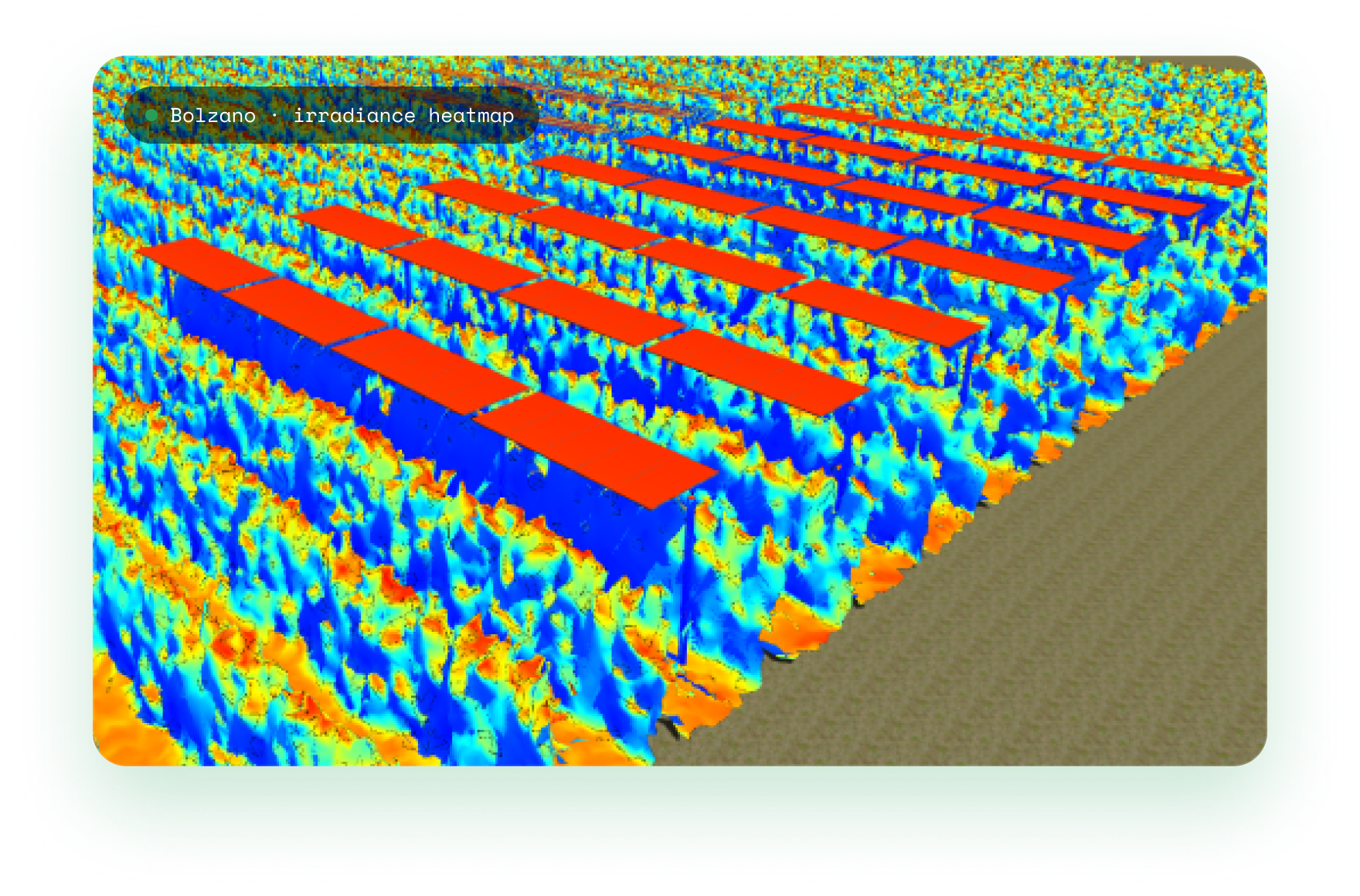
Heatmaps and view-factor views to read shading, asymmetry, rear-side exposure, and irradiance non-uniformity on the 3D model.
Pull irradiance source, far-horizon profile, and 3D terrain from site coordinates into the same workflow.
Compare module and row placement options and run parameter sweeps without rebuilding the scene each time.
Validated surface properties and PV module definitions for realistic reflectance and transmittance.
Posts, frames, trackers, and moving arrays modelled with their shading impact on the site.
Imported 3D models, drone scans, or custom layouts. LuciSun can reproduce complex project scenes and provide consulting support for site layout and measurement-system design.
Examples of what teams assess with LuSim beyond the Symbiosyst demonstrators, from layout comparison to irradiance-monitoring placement. See more details on our company website.
Tracker movement and structure shading; compare row and tracker placement options with irradiance split by component on crops and leaves.
Parking-surface albedo, frontal shading from trees, and structure impact. Assess rear-cell irradiance and compare placement of albedometers, rear-side sensors behind bifacial modules, and related monitoring equipment.
Compare module placement options at different orientations, with complex surrounding shading and local irradiance non-uniformity assessed on the facade.
Site geometry from a 3D drone survey, with per-module irradiance and shading captured from the real environment.
3D terrain from radar or elevation APIs. Compare module and row placement following the slope, with mutual shading across the installation.
Terrain, vegetation, infrastructure, and mixed obstructions. Assess local shading and irradiance non-uniformity; compare representative locations for pyranometers, reference cells, and photodiodes.
As part of the SYMBIOSYST project, we are releasing interactive demonstrators that show how LuSim traces 3D irradiance across real agrivoltaic sites, surface by surface. Two precomputed cases let you view results on open-field and greenhouse archetypes; a third configurable scene lets you set parameters and run your own simulation.
Three Symbiosyst scenarios: two precomputed views and one interactive scene you can run yourself.
 Precomputed · view only
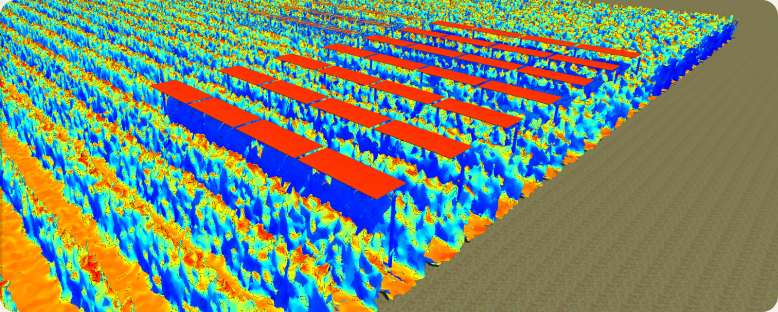
Bifacial panels raised on posts over field crops in South Tyrol. Inspect precomputed irradiance heatmaps on the cleaned 3D site.
View results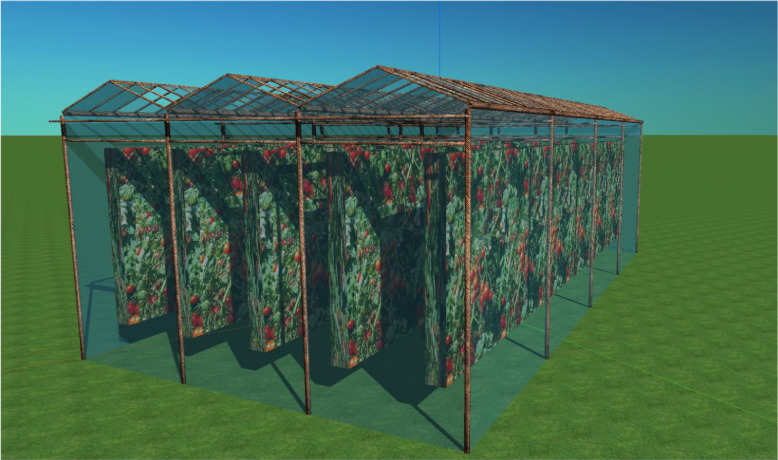 Precomputed · view only
Simplified KUBO / Venlo greenhouse with roof PV. Compare crop-level light under different cover materials (BTDF).
View results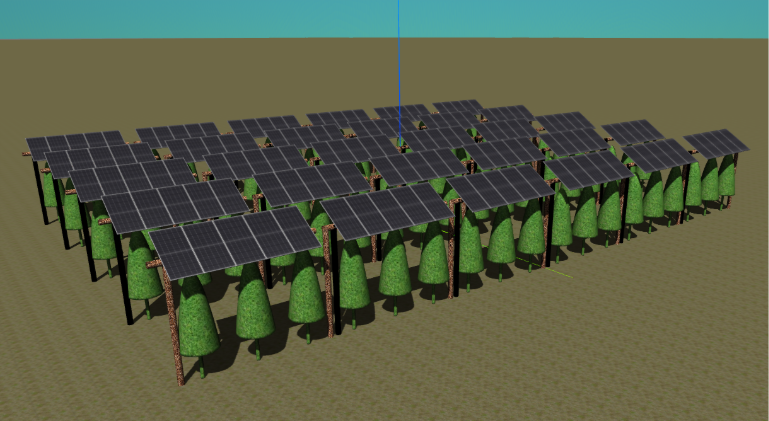 Interactive · simulate
Set crop and PV parameters on an elevated-tracker installation, run the simulation, and compare variants.
Open and simulate